
Pyramid Solitaire Saga
KingCard
4.576.67K Reviews
- Version
- 1.174.0.0
- Installs
- 10.00M
- Age Rating
- Everyone
Screenshots

Our Review of Pyramid Solitaire Saga
 Analysis by Appyee
I like card games that give me a clear little puzzle to solve without demanding a long session, and this one fits that mood well. Pyramid Solitaire Saga turns a familiar solitaire idea into a level-based journey, so each hand feels like a small step toward a new place rather than an isolated deal. Its ancient-world framing gives the cards a reason to be there, though the main appeal for me is still deciding which move will open the board.
That makes it an easy game to reach for during a commute, a short break, or a quiet evening when I want something more thoughtful than a simple matching game. It is free to download, but purchases are available, so I’d treat it as a free-to-start puzzle rather than assume every part of the experience is cost-free. The right expectations make a difference: it can be a relaxing card diversion, but later puzzles may ask for patience and careful planning.
Unveiling the Mysteries
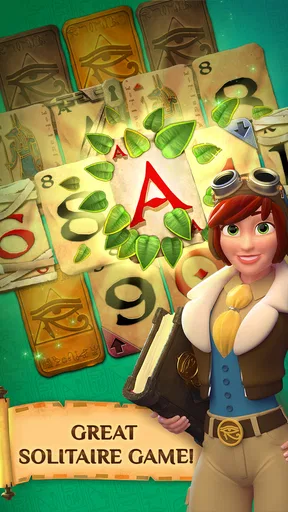
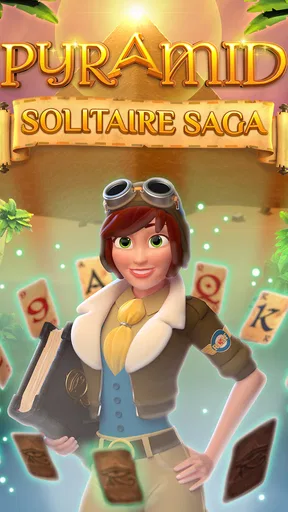
Pyramid Solitaire Saga isn’t just your run-of-the-mill solitaire game; it’s more like an adventure. Imagine a classic card game infused with an Indiana Jones vibe. You’ll be joining Helena, an intrepid treasure hunter, and her trusty beetle companion Kingsley, as they travel through magical worlds. Each level is like peeling back the layers of an ancient story, which keeps things fresh and exciting.
Gameplay Mechanics
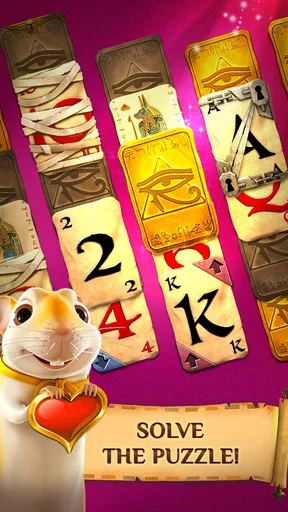
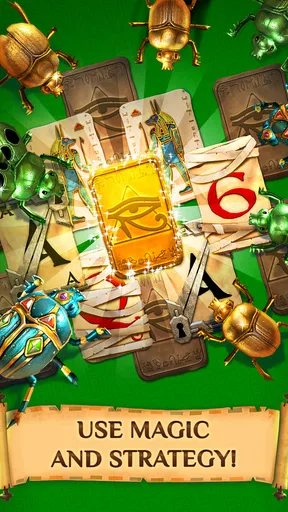
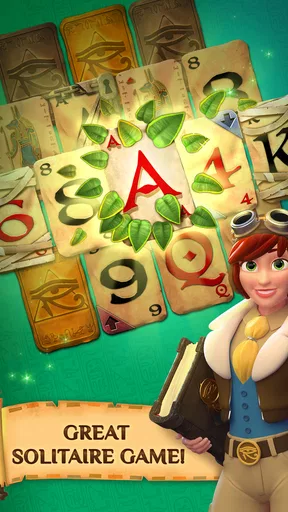
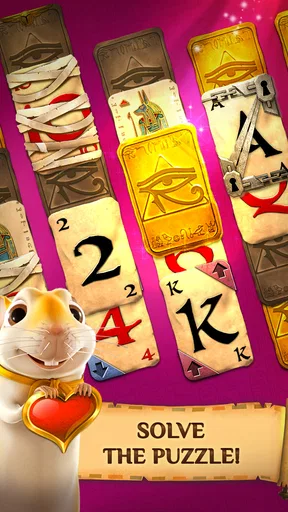
The game stays true to the classic solitaire mechanics but throws in its own unique twists. You’re tasked with clearing cards from the board by matching them in a sequence. The catch? You can only use cards that are one higher or lower than your current card. This simple yet strategic element makes every move count. The layout of the cards creates a pyramid shape, hence the name, and it’s your job to clear them out to uncover hidden scarabs.
As you progress, the levels get trickier, introducing obstacles and new card layouts that require more tactical thinking. Trust me, it’s addictively fun trying to solve these puzzles and unlock each new chapter of the storyline. Plus, there are power-ups and bonuses that can really save the day when you’re stuck.
Visuals and Soundtrack
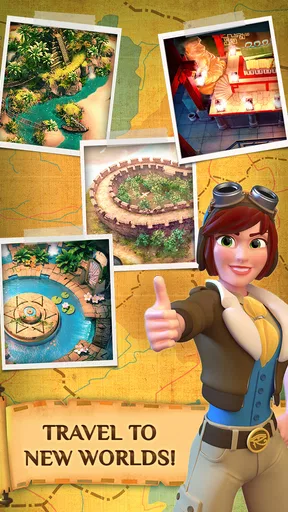
One thing that caught my eye right away was the game’s vivid design. The graphics are colorful and engaging, truly bringing the mystical worlds to life. Each level has its own unique setting, from sun-drenched deserts to lush, green landscapes, and the attention to detail is impressive. It’s like stepping into a beautifully illustrated storybook.
The soundtrack deserves a shout-out too. It’s soothing but also manages to create a sense of adventure that complements the gameplay perfectly. The gentle, mysterious tunes make the experience all the more immersive.
Planning Each Hand Instead of Playing on Autopilot
The useful habit I developed is to pause before clearing a card just because it is available. In a pyramid layout, exposing a covered card can matter more than extending a run by one move. When two legal choices are available, I look at which one is likely to reveal more of the board and which one might leave me with a dead end. That small check makes the game feel more like a puzzle and less like tapping through a deal.
I also try to treat a failed attempt as information rather than proof that a level is impossible. If I reach a point where no useful card can be played, I think back to the choices that removed access to the cards still covered. On a replay, changing just one early decision can give the rest of the layout a different rhythm. This is a practical way to improve without relying on a power-up every time the board gets awkward.
Power-ups are most valuable when they solve a specific problem, not simply because they are available. I would save one for a board state where a single extra option could expose important cards or preserve a run, rather than spend it early while several ordinary moves remain. That is a trade-off, since holding a tool too long can also mean finishing a level with it unused. The point is to use it deliberately, especially if you prefer not to make purchases.
A Good Fit for Short Breaks, With Some Patience Required
A realistic use for the game is a few levels while waiting for an appointment or taking a lunch break. Each board has a clear objective, so I can focus on a compact challenge and put the phone away afterward. It also suits a relaxed evening when I want something quieter than a fast-action game. The card decisions give me enough to think about, while the storybook presentation keeps the mood gentle.
It is less suitable when I want a completely open-ended card game with no level progression, or when I am looking for a game that rewards quick reflexes. Compared with ordinary draw-and-play solitaire, this version puts more emphasis on clearing a specific pyramid layout and moving through themed stages. Compared with broader puzzle games, its rules remain tied to card sequencing, which is a strength if that is the part you enjoy and a limitation if you want lots of different puzzle types.
For a newcomer, I’d suggest learning the one-rank-up-or-down rule first and paying attention to which cards are still hidden. There is no need to rush through a board simply because a move is legal. If you already play pyramid solitaire with physical cards, the central idea will feel familiar, but the level structure and obstacles make this a more guided, progression-focused version. If what you want is a traditional solitaire deal without an adventure wrapper, a simpler solitaire app may be a better match.
Progress, Purchases, and Fair Expectations
The game is free, and its optional in-app purchases range from $0.99 to $69.99 per item. That is a broad span, so I would check the price of any specific purchase before confirming it and decide what I am comfortable spending in advance. The existence of purchasable items does not by itself tell me how often a player needs them, so I would not treat spending as a requirement or assume that every difficulty point can be bypassed by paying.
For a fair personal test, I would start by playing without buying anything and see whether the regular level challenges feel satisfying. If I hit a difficult stretch, I would first replay with a different card-clearing order and use any available bonus thoughtfully. This gives me a better sense of whether I enjoy the puzzle on its own before considering a purchase. Players who prefer a strictly no-purchase experience should be comfortable ignoring optional offers; anyone who finds in-game purchase prompts distracting may prefer a paid game with a single upfront price.
There is also a social element in connecting with friends and comparing scores or progress. I see that as an optional nudge rather than the heart of the game: the core decisions are still made on the card board. If competition motivates you, comparing results can give a familiar level an extra goal. If you prefer private, self-paced play, you can focus on your own progress instead.
What the Store Details Mean in Practice
King developed this card game, which was released on June 30, 2014. Its current version is 1.168.0.0, and it requires Android 6.0 or later. It is also available on iOS. The age classification is Everyone, so its presentation is broadly suitable for general audiences, though parents may still want to consider how they handle optional purchases on a device used by a child.
It has a 4.5 average from around 1.1 million ratings, with roughly 77,000 written reviews and over 10 million installs. Those figures suggest that the game has reached a large audience, but they cannot tell me whether its pacing will suit a particular player. I would weigh the central format more heavily: if you enjoy patient card sequencing and a steady chain of levels, it is a sensible choice; if you dislike progression-based games or prefer every session to feel entirely self-contained, the format may wear thin.
One practical question is whether it works for a very brief session. Its individual board format makes it easy to approach in short bursts, although a difficult level may take more than one attempt. Another is whether prior solitaire experience is necessary: I don’t think it is, because the central rule is straightforward, but new players benefit from looking ahead instead of choosing the first playable card. And if you are wondering whether to spend, my advice is to play free first and only consider an item if you understand exactly what it offers and are happy with its displayed price.
Why You’ll Keep Coming Back
What really keeps me coming back to Pyramid Solitaire Saga is the blend of challenge and relaxation. It’s one of those games you can pick up for a quick session or get lost in for hours. There’s a real sense of satisfaction when you finally clear a tricky level or uncover the next piece of the storyline.
And let’s not forget the social aspect. You can connect with friends, compete for high scores, and share your progress. It adds a fun competitive edge, especially when you’re trying to outdo your buddy’s high score.
The Final Word
Overall, Pyramid Solitaire Saga is a delightful mix of strategy and storytelling. Whether you’re a seasoned solitaire pro or a curious newbie, there’s something here for everyone. It’s easy to pick up, hard to master, and impossible to put down. So, if you’re looking for a game that’s more than just a time-killer, give it a whirl. You might just find yourself on your own adventure, one card at a time.
Ready to dive into the world of card-based mysteries? You can download Pyramid Solitaire Saga on both Android and iOS. Trust me, it’s worth the journey!
Verdict
Strengths of Pyramid Solitaire Saga
- Engaging levels with increasing difficulty.
- Visually appealing graphics and themes.
- Smooth and intuitive gameplay mechanics.
- Regular updates with new challenges.
- Free to play with optional in-app purchases.
Limitations of Pyramid Solitaire Saga
- Requires internet to access some features.
- Ads can be intrusive between levels.
- Limited lives can slow down progress.
- In-app purchases can be pricey.
- Some levels may feel repetitive.
Other Releases by King
View All
Candy Crush Saga
Casual4.6

Candy Crush Soda Saga
Casual4.6

Candy Crush Jelly Saga
Puzzle4.6

Bubble Witch 3 Saga
Puzzle4.7
Similar Picks in This Category
View All
Solitaire - Classic Card Games
MobilityWare4.6

UNO!™
Mattel163 Limited4.3

Spider Solitaire: Card Games
MobilityWare4.6

Solitaire.com - Classic Cards
Tripledot Studios Limited4.7

Plants vs. Zombies™ Heroes
ELECTRONIC ARTS4.1

Hearthstone
Blizzard Entertainment, Inc.4.1
Frequently Asked Questions
What is Pyramid Solitaire Saga and how does it differ from other solitaire games?
Pyramid Solitaire Saga is a unique twist on the classic solitaire game, developed by King. Unlike traditional solitaire, this game combines puzzle elements with card play, where players aim to match cards that add up to 13. Set in an adventurous theme, it offers a story-driven experience with various levels and challenges.
Is Pyramid Solitaire Saga free to play, and are there any in-app purchases?
Yes, Pyramid Solitaire Saga is free to download and play. However, it includes in-app purchases that allow players to buy boosters and extra lives. While these purchases can enhance gameplay, they are entirely optional, and players can progress through the game without spending money.
What are the system requirements for Pyramid Solitaire Saga on Android and iOS devices?
For Android devices, Pyramid Solitaire Saga requires Android version 4.1 or higher. On iOS, it requires iOS 9.0 or later. The game is compatible with both smartphones and tablets, ensuring a smooth gaming experience across various devices.
How does the level progression work in Pyramid Solitaire Saga?
Pyramid Solitaire Saga features a map-based level progression system. Players advance by completing levels, each with unique challenges and objectives. As you progress, the difficulty increases, introducing new mechanics and obstacles. The game also includes special events and daily challenges to keep the experience fresh.
Can I play Pyramid Solitaire Saga offline?
Pyramid Solitaire Saga requires an internet connection to download updates and access certain features, such as leaderboards and social connectivity. However, once levels are downloaded, they can be played offline. Keep in mind that some in-game features might not be available without an internet connection.
Play our best games!


